
Amazon & eCommerce Weekly News Roundup — Week 2
A seller called us last Tuesday. She’d just received a stranded inventory notice on 340 units and couldn’t figure out why. Turned out Amazon had updated a listing attribute requirement — quietly, no announcement — and her prep didn’t match the new spec. That’s $1,200 in product sitting in a fulfillment center, unfulfillable. This week’s roundup covers the moves that are actually affecting sellers right now, not in theory.
Amazon Quietly Raised FBA Inbound Placement Fees Again
If you’re shipping to a single inbound location and relying on Amazon to split your inventory, you’re paying for it. Amazon’s inbound placement fees — introduced in March 2024 — have seen adjustments that most sellers didn’t catch. For standard-size items, that’s anywhere from $0.21 to $0.49 per unit depending on whether you’re using Amazon-optimized shipment splits or minimal splits.
We see this weekly at our warehouse. Sellers build a cost model in Q1 and never update it. By Q3 their margins are off and they don’t know why. Check your inbound placement fee reports in Seller Central under Payments > Fee Preview. It takes five minutes.
FTC Scrutiny on Subscription Cancellations — What It Means for eCommerce Brands
The FTC’s “click-to-cancel” rule is now being enforced. If you run a subscription model — subscribe-and-save through your DTC site, a membership, anything recurring — cancellation has to be as easy as sign-up. The rule went into effect in January 2025.
This isn’t just a legal footnote. Brands that built retention on friction are now exposed. If your cancel flow requires a phone call or a buried form, that’s a target. Audit it now, before a complaint does it for you.
Walmart Marketplace Is Actually Catching Up — Here’s Where
Walmart’s third-party seller count crossed 150,000 active sellers in early 2025. More relevant: their WFS (Walmart Fulfillment Services) two-day delivery badge is now showing up prominently in search results, similar to how Prime filtering works on Amazon.
We’ve had a handful of clients start shipping to WFS alongside Amazon. The prep requirements are different — Walmart has specific label placement rules and carton size limits that’ll fail an inbound if you miss them. Don’t assume Amazon prep specs transfer directly. They don’t.
Amazon’s Reimbursement Policy Changed — and the Window Got Shorter
As of March 2025, Amazon updated its lost and damaged inventory reimbursement policy. Sellers now have a stricter filing window — 60 days from when a claim becomes eligible — down from the previous longer window many third-party tools were built around. According to Amazon’s own policy documentation, claims submitted outside this window will not be considered.
One of our clients learned this the hard way. He was sitting on $800 in eligible reimbursements and missed the window because his reimbursement tool hadn’t updated its logic yet. Set a calendar reminder. Review your FBA inventory adjustments report monthly, not quarterly.
Inventory Limits Are Shifting Ahead of Q4 — Plan Accordingly
Amazon typically adjusts IPI (Inventory Performance Index) thresholds and storage limits in late summer ahead of peak season. We’re already seeing early signals in how restock limits are being calculated for some ASIN categories. If your IPI score is sitting below 450, storage limits can get tight fast.
At 365PrepCenter, we hold inventory for sellers who need to stage product before sending it in batches — specifically to manage restock limits without losing momentum. It’s a practical workaround a lot of mid-volume sellers use but don’t talk about publicly.
What’s Actually Moving at the Dock Right Now
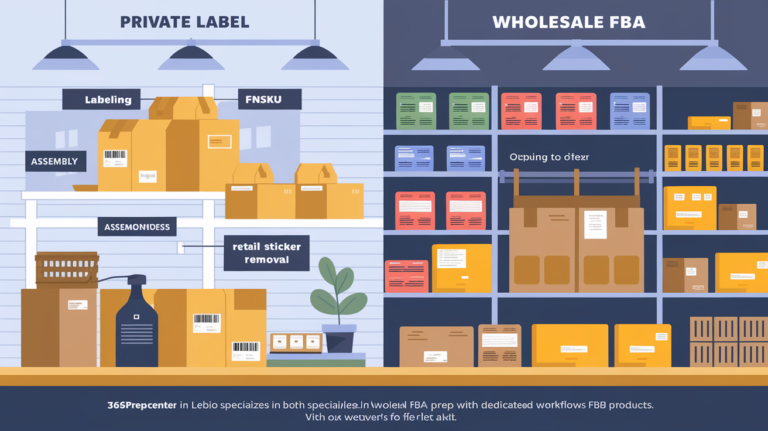
Honestly, the category we’re seeing the most inbound volume in right now is home goods and kitchen — which tracks with typical pre-Q4 build-up. But the prep errors are up too. Poly bag failures, incorrect FNSKU placement on bundled items, missing suffocation warning labels on bags over 5 inches.
Amazon’s unplanned prep fee for a missing poly bag is $0.52 per unit. The bag itself costs about $0.04. That’s a 1,200% cost multiplier for skipping a step. At 365PrepCenter in Lebanon, Ohio, we catch those issues before they hit a fulfillment center — that’s the whole point of using a prep center.
Stay on top of the policy updates. They move faster than most sellers track. If you want a warehouse team that actually reads the policy changes and preps to them, get a free quote from 365PrepCenter and see what consistent, spec-accurate prep looks like.